ITR Filing for AY 2026-27 is Now Open!
Don’t wait until the July deadline. Ensure accuracy, maximize your refunds, and stay compliant with expert CA-assisted filing for Assessment Year 2026-27 (Financial Year 2025-26).

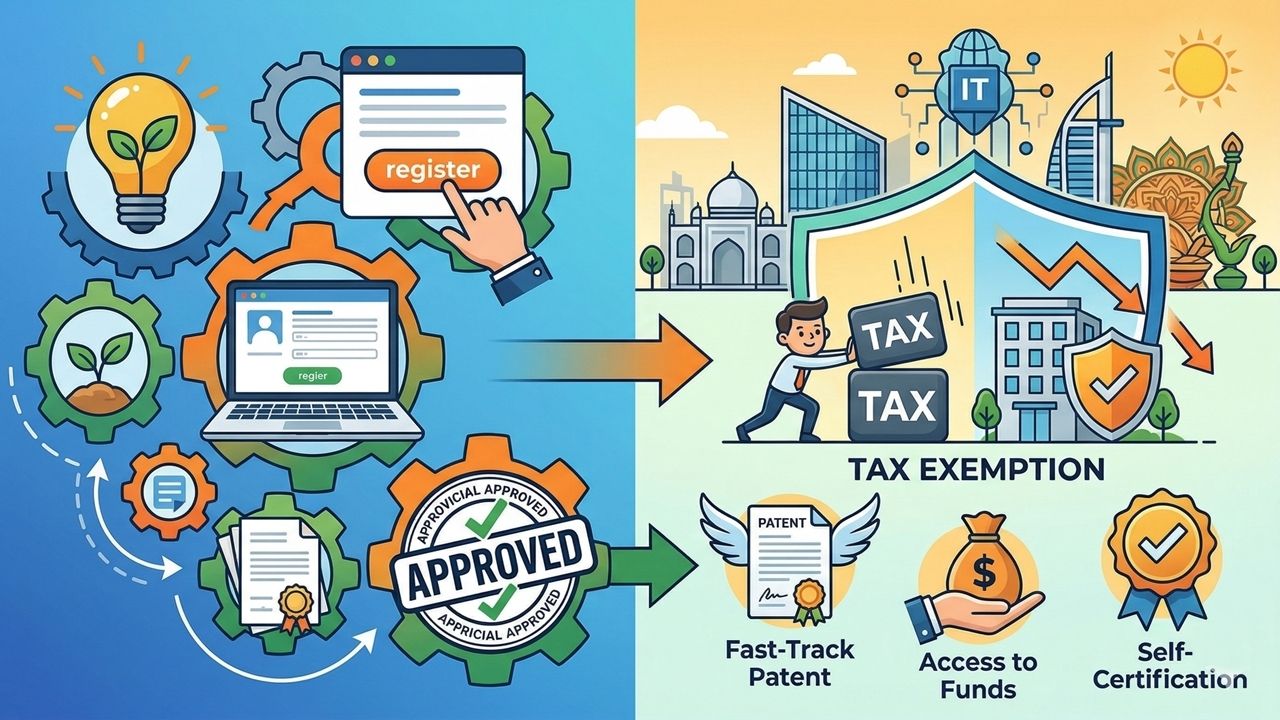
India is currently home to one of the fastest-growing startup ecosystems in the world. To fuel this momentum, the Government of India launched the “Startup India” initiative—a flagship program designed to build a strong ecosystem for nurturing innovation and driving economic growth.
At the heart of this initiative is the DPIIT (Department for Promotion of Industry and Internal Trade) Certificate of Recognition. For high-intent entrepreneurs, this certification is not just a badge of honor; it is a gateway to substantial tax exemptions, easier compliance, and exclusive funding opportunities.
If you are building a scalable, innovative business, here is everything you need to know about the top benefits of Startup India Registration and how to secure it.
Before diving into the benefits, it is crucial to ensure your business structure qualifies. To be eligible for DPIIT recognition, your startup must meet the following criteria:
Securing your DPIIT recognition unlocks a wealth of operational and financial advantages designed to help you scale faster.
1. Three-Year Income Tax Exemption This is the most highly sought-after benefit. Startups recognized by DPIIT can apply for an income tax exemption under Section 80-IAC of the Income Tax Act. Once approved by the Inter-Ministerial Board (IMB), your startup is completely exempt from paying income tax for three consecutive years out of its first ten years of incorporation. This allows you to reinvest your early profits directly back into growing the business.
2. Massive Rebates on Intellectual Property (IP) Protecting your brand and inventions is critical, but it can be expensive. Recognized startups enjoy a fast-tracked patent application process and an 80% rebate on patent filing fees. Furthermore, you receive a 50% discount on trademark filing fees, making it significantly cheaper to secure your intellectual property.
3. Easier Access to Government Tenders Government contracts can be incredibly lucrative, but they usually require “prior experience” or “prior turnover,” locking new startups out. Under Startup India, recognized startups are exempt from these strict prior experience and turnover criteria. You are also exempted from submitting an Earnest Money Deposit (EMD) while bidding, leveling the playing field with established corporations.
4. Self-Certification and Simplified Compliance To reduce the regulatory burden on new founders, the government allows recognized startups to self-certify compliance for nine labor and three environmental laws. For the first three to five years, there will be no surprise inspections regarding these specific laws, allowing you to focus entirely on your core business operations.
5. Fast-Track Winding Up In the unfortunate event that a business venture fails, winding down a standard company can be a drawn-out, complex legal nightmare. Under the Insolvency and Bankruptcy Code (IBC), recognized startups can wind up their operations within just 90 days, allowing founders to pivot or move on to their next venture quickly.
The process is entirely digital, but it requires careful attention to detail.
While the Startup India application is an online process, presenting your business’s “innovative” aspect correctly and applying for the specific Inter-Ministerial Board (IMB) tax exemptions requires strategic documentation.
Do not risk delays or rejections due to technicalities. The compliance experts at Your Legal Chamber specialize in helping entrepreneurs structure their startups perfectly, secure DPIIT recognition, and file for the lucrative Section 80-IAC tax exemptions.